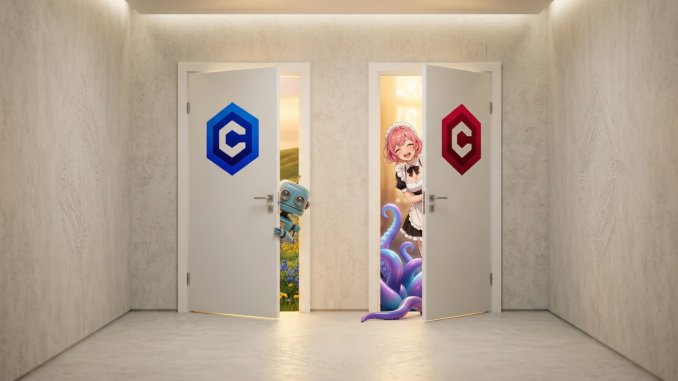
Civitai has announced a major platform shift, introducing a “two front doors” strategy that separates its ecosystem into two distinct websites: Civitai.com and Civitai.red. The move is designed to balance mainstream accessibility with creative freedom, addressing ongoing challenges around content moderation and monetization in the AI space.
If you’re thinking about purchasing a new GPU, we’d greatly appreciate it if you used our Amazon Associate links. The price you pay will be exactly the same, but Amazon provides us with a small commission for each purchase. It’s a simple way to support our site and helps us keep creating useful content for you. Recommended GPUs: RTX 5090, RTX 5080, and RTX 5070. #ad
Under the new structure, Civitai.com will serve as the primary platform for safe-for-work content. This version is designed to meet stricter compliance standards, making it more compatible with advertisers, payment processors, and broader audiences.
Civitai.red, on the other hand, will host less restricted content. This separate environment allows creators to continue sharing a wider range of AI-generated material that may not meet the requirements of traditional platforms. By splitting the experience, Civitai aims to avoid over-restricting its community while still maintaining business viability.
One of the key drivers behind this change is payment infrastructure. Platforms that host unrestricted or adult-oriented content often face limitations from major payment providers. By isolating stricter content on Civitai.com, Civitai can support more reliable payment options such as credit cards and subscriptions. Meanwhile, Civitai.red can continue to support more flexible forms of content distribution.
Despite the split, Civitai plans to maintain a unified experience where possible. User accounts are expected to work across both platforms, and the overall ecosystem will remain connected. The separation focuses on content categorization rather than fragmenting the community entirely.
Community response has been mixed. Some users see the change as a smart compromise that allows the platform to grow while preserving creative freedom. Others are concerned about added complexity or potential fragmentation. However, there is clear interest in how this new structure may reintroduce previously restricted content and expand opportunities for creators.
This move reflects a broader trend in the AI industry. As generative AI platforms continue to grow, they face increasing pressure from regulators, payment providers, and mainstream audiences. At the same time, users expect flexibility and fewer creative limitations. Civitai’s dual-platform approach is an attempt to address both sides without sacrificing either.
Looking ahead, this change may be just the beginning. Civitai has hinted at further improvements, including better monetization tools, refined moderation systems, and more specialized user experiences.
Civitai’s decision highlights an important shift in how AI platforms operate. Instead of trying to balance all requirements within a single system, splitting into multiple environments may become a more common strategy.
The success of this approach will depend on how well Civitai can maintain a seamless user experience while clearly defining the purpose of each platform. If executed well, it could set a precedent for how other AI platforms handle the growing tension between compliance and creative freedom.
Leave a Reply